
ADÉLA Marijuana Meaning and Review

A Slow Burn With Something to Say
ADÉLA has always had a knack for building worlds inside songs, and Marijuana is no exception. The track carries a hazy, almost weightless quality that feels entirely intentional, a sonic atmosphere that mirrors the dreamlike state its title evokes. From the opening moments, Marijuana draws the listener into something that feels unhurried and deliberate, settling into a groove that refuses to rush itself. It is the kind of song that asks you to sit still and let it move over you rather than the other way around.
Production That Breathes
The production on Marijuana is a clear highlight, handled here by Blake Slatkin, grandma, and Isaac Eiger, a combination that brings a layered yet uncluttered approach to the sound. Each of these producers brings their own sensibility to the table, and the result feels cohesive rather than crowded. There is a warmth to the low end that anchors Marijuana without weighing it down, and the mix leaves deliberate space around ADÉLA's vocals so that every breath and inflection registers fully. The production style sits somewhere between intimate bedroom pop and polished alternative, threading that needle with real confidence.
ADÉLA's Vocal Performance
ADÉLA delivers Marijuana with the kind of cool, controlled energy she has become known for. Her voice does not strain for impact but achieves it anyway, carrying a natural ease that makes the performance feel lived in rather than performed. There is a looseness to the delivery that suits Marijuana perfectly, as though she recorded it at exactly the right moment and at exactly the right temperature. The emotional texture is understated but present, landing in a register that feels more felt than announced.
First Aired to the World
Marijuana first surfaced as a tease on ADÉLA's private Instagram account before making its live debut during her Provocatour, performed alongside Nasty Dirty Gross. That early secrecy suits the song well. There is something about Marijuana that feels like it was not meant for everyone immediately, something to be shared gradually rather than broadcast all at once. The setlist confirmation of its title only added to the sense that this was a song worth waiting for, and the live setting would have allowed audiences to feel its full atmospheric weight in real time.
A Song That Lingers
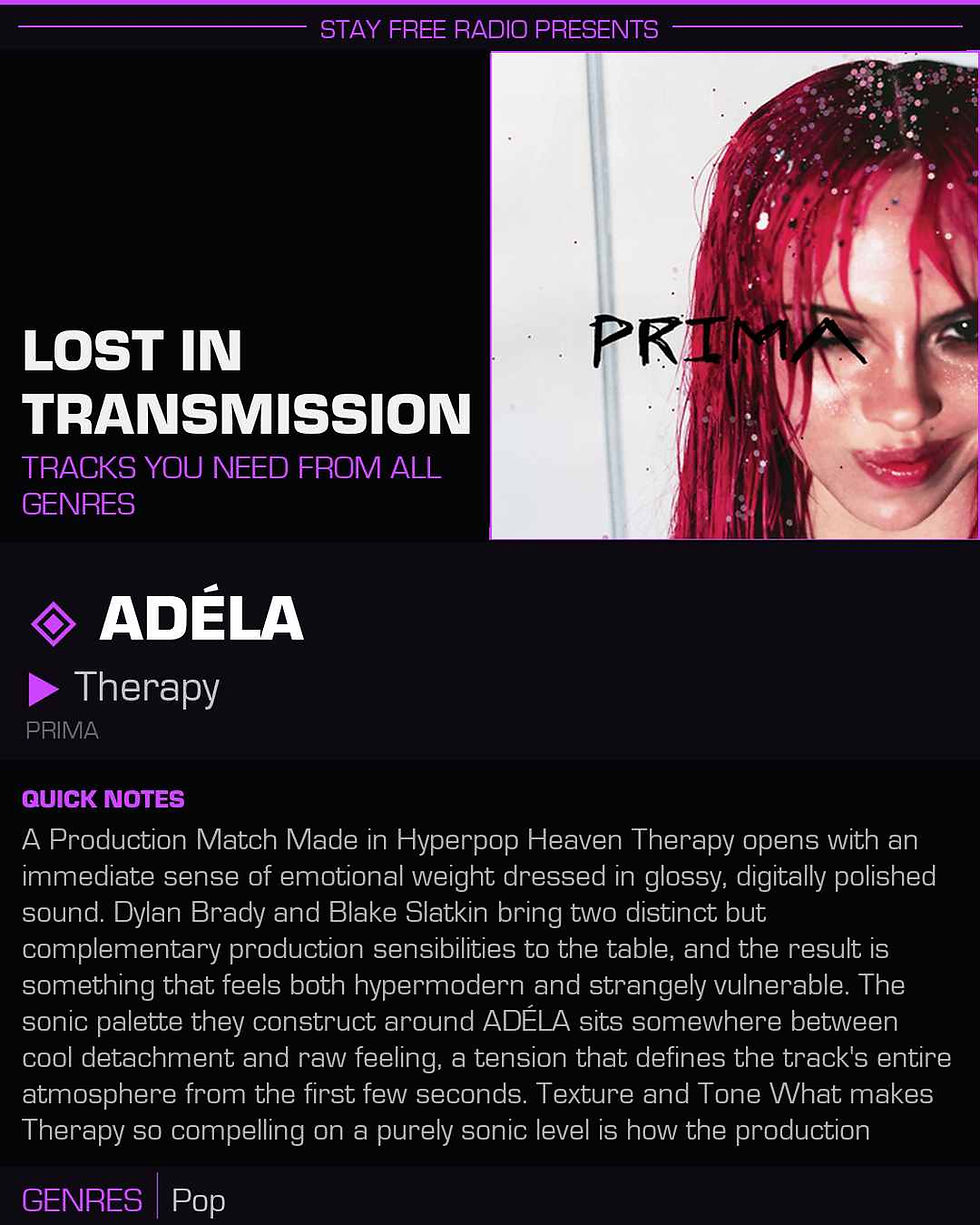
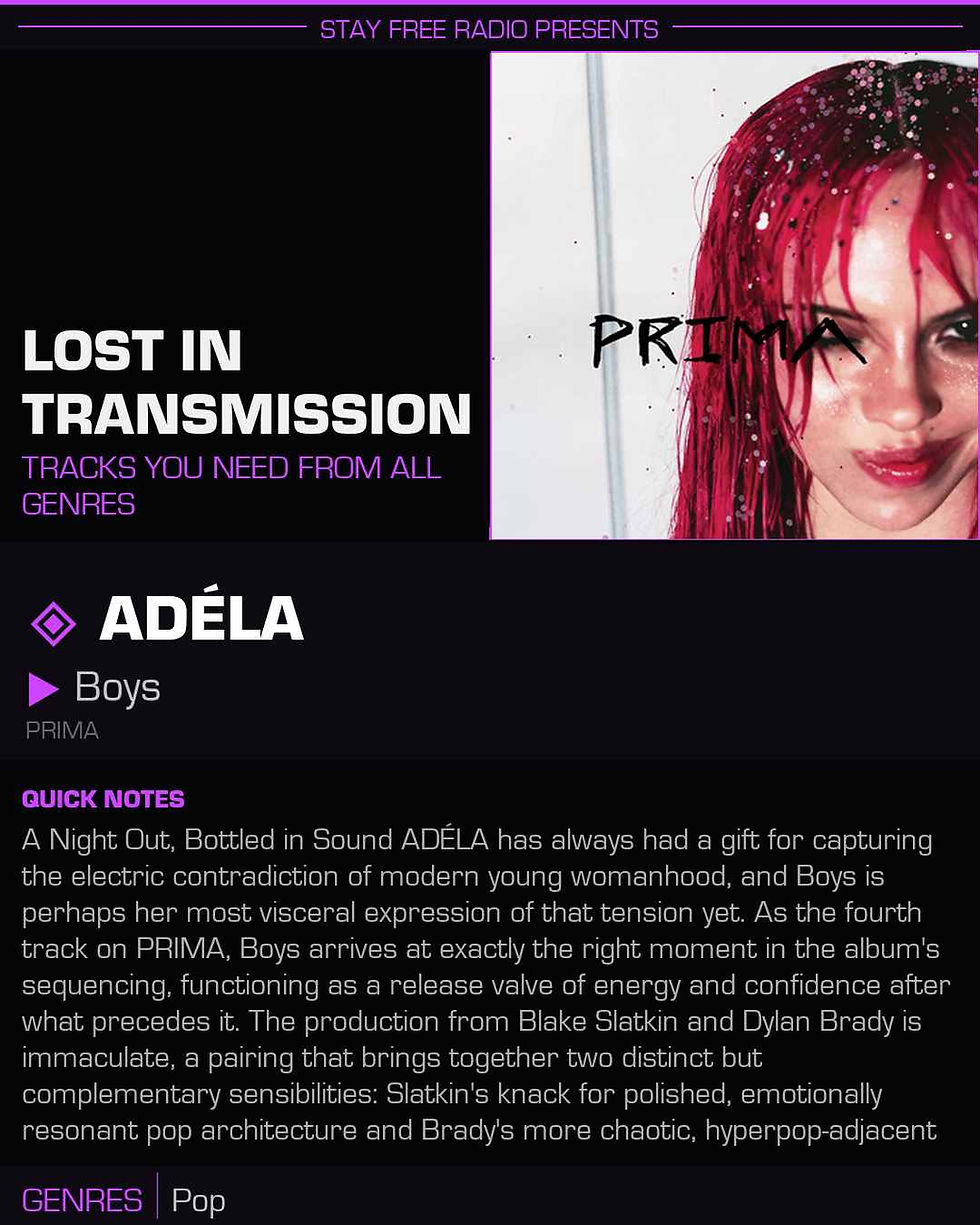
What makes Marijuana stand out within the early glimpses of PRIMA is how confidently it occupies its own space. It does not try to be immediate or urgent. Instead it builds its presence slowly, the way a feeling does rather than an event. The collaborative production gives it texture and dimension, while ADÉLA's performance keeps it grounded and personal. Marijuana is the kind of album cut that grows into a favourite quietly, the one you realise you have been returning to without quite meaning to.
Listen To ADÉLA Marijuana
ADÉLA Marijuana Lyrics Meaning Explained
The meaning of Marijuana by ADÉLA is a playful yet deeply felt exploration of infatuation, framed through the lens of a late-night drive and a clever extended metaphor comparing romantic attraction to the effects of cannabis. The song captures that specific, intoxicating feeling of early desire the kind that makes rational thought dissolve and leaves you reaching for comparisons that don't quite fit, except that they fit perfectly.
The Central Metaphor
The song's title and hook establish the governing comparison immediately: "I think I like you like you like marijuana." This isn't just a catchy line it's the emotional thesis of the entire track. The singer isn't claiming to be high, or even to smoke. She's saying that her feelings for this person operate like an addiction, like a substance that softens the edges of everything and makes the world feel warmer. The comparison is carefully calibrated. Marijuana is known to increase feelings of attraction, affection, and arousal, reduce stress, and heighten sensitivity. ADÉLA is describing her romantic feelings in those exact terms, without ever needing to say any of it directly.
A High Without the Smoke
The intro establishes an important tension that carries through the rest of the song. She sings, "I can't smoke, I have to sing, but I don't mind a contact high." On one level, this is a practical statement: she's protecting her voice. But on another, it sets up the central double entendre that gives the song much of its wit. A contact high describes the experience of becoming intoxicated not through direct consumption but through proximity. By the end of the song, it becomes clear that ADÉLA's contact high isn't secondhand smoke at all it's the person beside her. The warmth, the euphoria, the loss of clear thinking: all of it is coming from him.
The Drive as Intimacy
The verse builds a vivid sense of place that grounds the song's abstract emotions in something tangible. "PCH, pull over on the right / Windows fog up, write your name with mine / In a heart, you and me for life." The Pacific Coast Highway setting carries connotations of freedom and late-night escapism, and the drive itself feels like a liminal space where ordinary rules don't apply. The fogged windows are a classically intimate image, turning the car into a private world sealed off from everything outside it. Writing names inside a heart is almost comically simple as a romantic gesture and that's precisely the point. The line "you and me for life" carries what the notes describe as an "intentionally amateurish and youthful charm," the kind of declaration you make when feeling overwhelms your better judgment. It isn't meant to be sophisticated. It's meant to be true in the moment.
The shift from a Honda to "revving your engine" adds a playful energy to the verse, suggesting escalation and excitement. The Honda itself connects to the chorus, where "ride you in your Honda" pairs the mundane reality of the car with the charged emotional state of the narrator, finding something electric in the ordinary.
Pop Ambition and Self-Awareness
"I like how you look at me like I'm the next Madonna" is a line that operates on several levels simultaneously. It captures the particular giddiness of being admired by someone you're attracted to the way their gaze can briefly make you feel like the most important person alive. But it also reveals something about ADÉLA's self-conception. The Madonna comparison isn't incidental. She returns to it in other songs, referencing "Madonna on the wall" and later declaring "No Mary, all Madonna." Madonna here functions as a symbol of commanding presence, of someone who owns the attention of a room completely. In the context of this song, ADÉLA isn't just flattered by the comparison she's describing the feeling of being truly seen by another person as the same experience as being recognized for something great.
The shift in the second chorus from "Playin' Nirvana" to "Feel like nirvana" is subtle but significant. Earlier, Nirvana is just the music playing in the car. By the second pass, it has become a feeling a state of bliss or transcendence. The word does double duty, connecting back to the song's themes of natural euphoria and the way strong emotion can mimic the effects of a substance.
Romantic Daydreaming and Physical Overwhelm
The pre-chorus introduces a rush of future-oriented fantasy that feels both earnest and slightly unhinged in its speed. "Tell me I'm the one, isn't it so fun / To think about what we would name our daughter and our son?" In the span of a single couplet, the narrator jumps from the present moment to imagining children together. This is the thought pattern of early infatuation, where the mind races ahead of any reasonable timeline and the absurdity of it is part of what makes it thrilling. She's not asking him to commit she's asking him to play along, to share in the fantasy just long enough to make it feel real.
The pre-chorus then lands on one of the song's most effective moments: "And every time you touch me there, I feel like, I, I, I." The sentence never finishes. The stuttered "I, I, I" is the sound of a thought being swallowed by sensation, of language breaking down in the face of physical experience. It mirrors, structurally, the very high she's been describing throughout the song a state where coherent thought becomes difficult and the body takes over. Then the chorus returns, completing the thought she couldn't finish: the feeling is like nirvana. Like marijuana. Like something that doesn't have a clean, sober explanation.
The Shape of the Song
What holds "Marijuana" together is its consistency of mood. From the hazy, harmonized intro to the unresolved outro of repeated vowel sounds, the song maintains the texture of a contact high throughout warm, slightly unfocused, pleasantly overwhelming. The lyrics never overexplain their metaphor or push it past the point of elegance. Instead, they let the central comparison breathe, circling back to it in different forms: the fogged windows, the name written in a heart, the stutter, the shift from "playing" to "feeling" nirvana. Each element reinforces the same idea, that being near this person produces something indistinguishable from intoxication, and that ADÉLA, who can't smoke because she has to sing, has found her contact high anyway.
ADÉLA Marijuana Lyrics
Intro
(Ooh-ooh-ooh)
Why don't you roll the windows up? (Ooh-ooh-ooh-ooh)
I can't smoke, I have to sing, but (Ooh-ooh-ooh)
I don't mind a contact high (Ooh-ooh-ooh)
Chorus
Playin' Nirvana, ride you in your Honda
I like how you look at me like I'm the next Madonna
Now you wanna, now you want it harder
I'm like, "I think I like you like you like marijuana," 'juana
Post-Chorus
Baby, ooh-ooh
I want you, baby, ooh-ooh
Verse
I wanna rev your engine, hop in, take a ride
PCH, pull over on the right
Windows fog up, write your name with mine
In a heart, you and me for life
Pre-Chorus
Tell me I'm the one, isn't it so fun
To think about what we would name our daughter and our son?
So tell me I'm the one, it really turns me on
And every time you touch me there, I feel like, I, I, I
Chorus
Feel like nirvana, ride you in your Honda
I like how you look at me like I'm the next Madonna
Now you wanna, now you want it harder
I'm like, "I think I like you like you like marijuana," 'juana
Post-Chorus
Baby, ooh-ooh
I want you, baby, ooh-ooh
Outro
Ooh-ooh-ooh-ooh
Ooh-ooh-ooh-ooh
Ooh-ooh-ooh-ooh

Comments