
ADÉLA Red Bottoms Meaning and Review
- Jun 14
- 6 min read
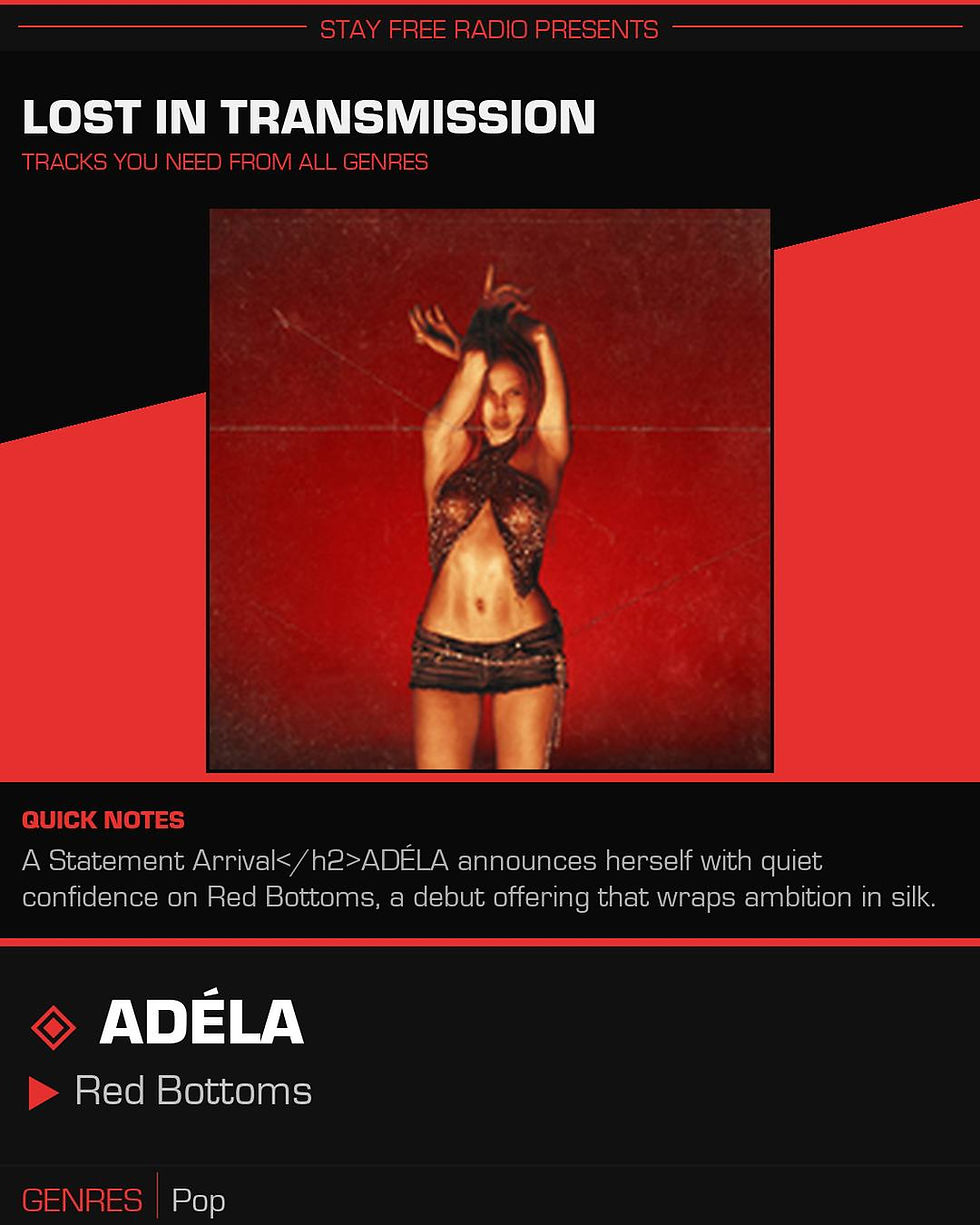
A Statement Arrival
ADÉLA announces herself with quiet confidence on Red Bottoms, a debut offering that wraps ambition in silk. Produced by Blake Slatkin and Dylan Brady, the song positions ADÉLA as an artist who understands that restraint can be its own form of power. From the first moments, Red Bottoms settles into a mood rather than demanding your attention, pulling you in through atmosphere and texture rather than spectacle.
Soft Touch, Sharp Edge
The production on Red Bottoms is a careful balancing act between softness and drive. Blake Slatkin and Dylan Brady construct a sonic space that feels intimate and expansive at the same time, layering sensual pop warmth over a beat that keeps a firm, steady pulse beneath the surface. There is a tension in that contrast, the kind that makes a song feel alive, like it is breathing. The driving rhythm gives Red Bottoms a forward momentum without ever tipping into aggression, keeping everything suspended in a kind of luxurious forward lean.
ADÉLA's Tonal World
What ADÉLA establishes through Red Bottoms is a distinct emotional register. The song feels tactile, like something you could touch, cool and smooth and just slightly out of reach. It occupies a space between confidence and desire, between having and wanting. That sensual quality is not accidental but is instead the entire point of how Red Bottoms is constructed, with every production choice serving that central feeling rather than distracting from it.
Production as Identity
Blake Slatkin and Dylan Brady bring a clear aesthetic vision to Red Bottoms that complements ADÉLA's presence rather than overwhelming it. The beat sits underneath her like a foundation, grounding the softness of the pop elements without stripping them of their warmth. The production breathes with the vocal performance, and the result is a song that sounds considered and deliberate. Red Bottoms does not feel like a first attempt but like a fully realized statement.
A Debut That Knows Itself
For a song teased before a debut album, Red Bottoms carries a striking amount of self-assurance. It does not overreach or oversell, which is perhaps its greatest strength. ADÉLA and her collaborators have crafted something that feels polished without being cold, accessible without being disposable. If Red Bottoms is any indication of what the album will offer, ADÉLA is arriving not with a bang but with something more lasting, a mood, a world, and a voice that already knows exactly where it stands.
Listen To ADÉLA Red Bottoms
ADÉLA Red Bottoms Lyrics Meaning Explained
The meaning of Red Bottoms by ADÉLA is a deeply personal exploration of romantic insecurity, the fear of being loved conditionally, and the emotional armor we build to protect ourselves from past wounds. Through the central metaphor of luxury footwear, ADÉLA transforms a status symbol into a vehicle for vulnerability, asking whether she is worthy of love not just at her best, but at her most worn.
The Push and Pull of an Unstable Love
The song opens by establishing the emotional terrain of a relationship defined by inconsistency. ADÉLA sings, "Cuts like a knife, call me your wife / But it's only on the weekend," capturing the particular ache of being adored in bursts rather than steadily. His affection intensifies precisely when it is least sustainable during the breaks, the off-periods, or when she is walking out the door. "Kinda feels like you want me for life / But it's only when I'm leavin'" reveals that his declarations feel less like genuine devotion and more like a reflexive response to losing her. This instability becomes the emotional foundation for everything that follows. She is not grieving a love that has ended, but one that keeps flickering present enough to hope, absent enough to hurt.
The Red-Bottom Metaphor
The song's most striking achievement is the extended metaphor at its core. Christian Louboutin's red-bottomed shoes are synonymous with luxury and perfection, but their signature lacquered red soles are also subject to wear. ADÉLA takes this physical reality and turns it into an emotional one: "I'm like my red-bottom soles / You can't wear me out too many times / 'Cause when the red starts to go / Will you love what's on the other side?"The red sole represents the polished, pristine version of herself the one that is easiest to admire. As the red wears away with use and exposure, what is left is something more ordinary, more human. Her fear is that like a consumer who keeps an expensive pair in the box to preserve their value, her partner may only cherish her when she appears flawless. "Nobody wants dirty shoes" is blunt and almost brutal in its self-awareness: she has internalized the idea that imperfection makes a person undesirable, and she is terrified that the person she loves feels the same way. The final line of the chorus, "If I'm not perfect, will you say goodbye?" is the question the entire song is building toward.
Emotional Guardedness and the Language of Fashion
One of the song's more subtle but resonant ideas lives in the pre-chorus: "I can't talk in feelings, but I can talk in fashion." ADÉLA frames her emotional guardedness not as coldness but as a translation problem. She does not have easy access to the language of vulnerability, so she speaks instead through the coded, surface-level language of style and aesthetics. The red-bottoms metaphor is not just a creative choice it is the only language she currently has for saying what she means. This detail makes the song feel genuinely self-aware rather than merely self-pitying.The bridge strips that guardedness away with striking directness: "I think I'm too fucked up from everything that's happened." It is the moment the metaphor briefly falls aside and she speaks plainly, suggesting that her difficulty with intimacy is not a personality quirk but the result of accumulated damage.
Father Wounds and the Pattern of Feeling Secondhand
The line "Nobody wants dad issues" carries particular weight given that ADÉLA has elsewhere explored her father's absence and her intention to break the patterns it created. In this context, the lyric reads as something more than a casual aside. It suggests that the anxiety running through the entire song the fear of being abandoned once she is no longer perfect, the compulsion to perform rather than simply be has roots that predate this relationship. She does not want to feel "secondhand," a word that echoes the shoe metaphor while also gesturing toward a deeper fear of being treated as something already used up, already discarded by someone else.
Breaking In and the Hope for Softness
Amid all the anxiety, the second verse offers something close to hope. "Give me time, break me in / Shower me with compliments / If you do, then I'll be soft / The way that leather gets" reframes the shoe metaphor in a gentler direction. New leather is stiff and unyielding, but with care and patience it molds itself to the wearer and becomes something comfortable and intimate. ADÉLA is saying that her guardedness is not permanent. She is not broken she is unbroken-in. The tenderness she is capable of is waiting on the other side of consistent, patient love. The question the song cannot answer is whether the person she is asking is willing to do that work.
ADÉLA Red Bottoms Lyrics
Verse 1
Cuts like a knife, call me your wifeBut it's only on the weekendKinda feels like you want me for lifeBut it's only when I'm leavin'My worst fear, you'll disappearAfter one disagreementThen I'm grievin', yeah
Pre-Chorus
I'll say how I'm doin' dependin' on who's askin'I can't talk in feelings, but I can talk in fashion
Chorus
I'm like my red-bottom solesYou can't wear me out too many timesToo many times'Cause when the red starts to goWill you love what's on the other side?The other side?Nobody wants dirty shoesNobody wants dad issuesDon't wanna feel secondhandNot when it comes to youI'm like my red-bottom solesIf I'm not perfect, will you say goodbye?You say goodbye?
Verse 2
Need to know your love won't goWhen I got lines and creasesHold the weight or fold and breakDependin' on how I'm treatedGive me time, break me inShower me with complimentsIf you do, then I'll be softThe way that leather gets
Chorus
I'm like my red-bottom solesYou can't wear me out too many timesToo many times'Cause when the red starts to goWill you love what's on the other side?The other side?Nobody wants dirty shoes (Dirty shoes)Nobody wants dad issues (Dad issues)Don't wanna feel secondhand (Secondhand)Not when it comes to youI'm like my red-bottom solesIf I'm not perfect, will you say goodbye?You say goodbye?
Bridge
I say how I'm doin' dependin' on who's askin'I think I'm too fucked up from everythin' that's happened (Ah-ah-ah-ah-ah)I say how I'm doin' dependin' on who's askin'I can't talk in feelings, but I can talk in fashion (Ah-ha-ah)
Chorus
I'm like my red-bottom solesYou can't wear me out too many timesToo many times (Too many times)'Cause when the red starts to goWill you love what's on the other side?The other side? (Oh, no)Nobody wants dirty shoes (Dirty shoes)Nobody wants dad issues (Dad issues)Don't wanna feel secondhand (Secondhand)Not when it comes to youI'm like my red-bottom solesIf I'm not perfect, will you say goodbye?You say goodbye?

Comments