
Jhené Aiko Like, Whatever Meaning and Review

A Dreamy Collision of Cool
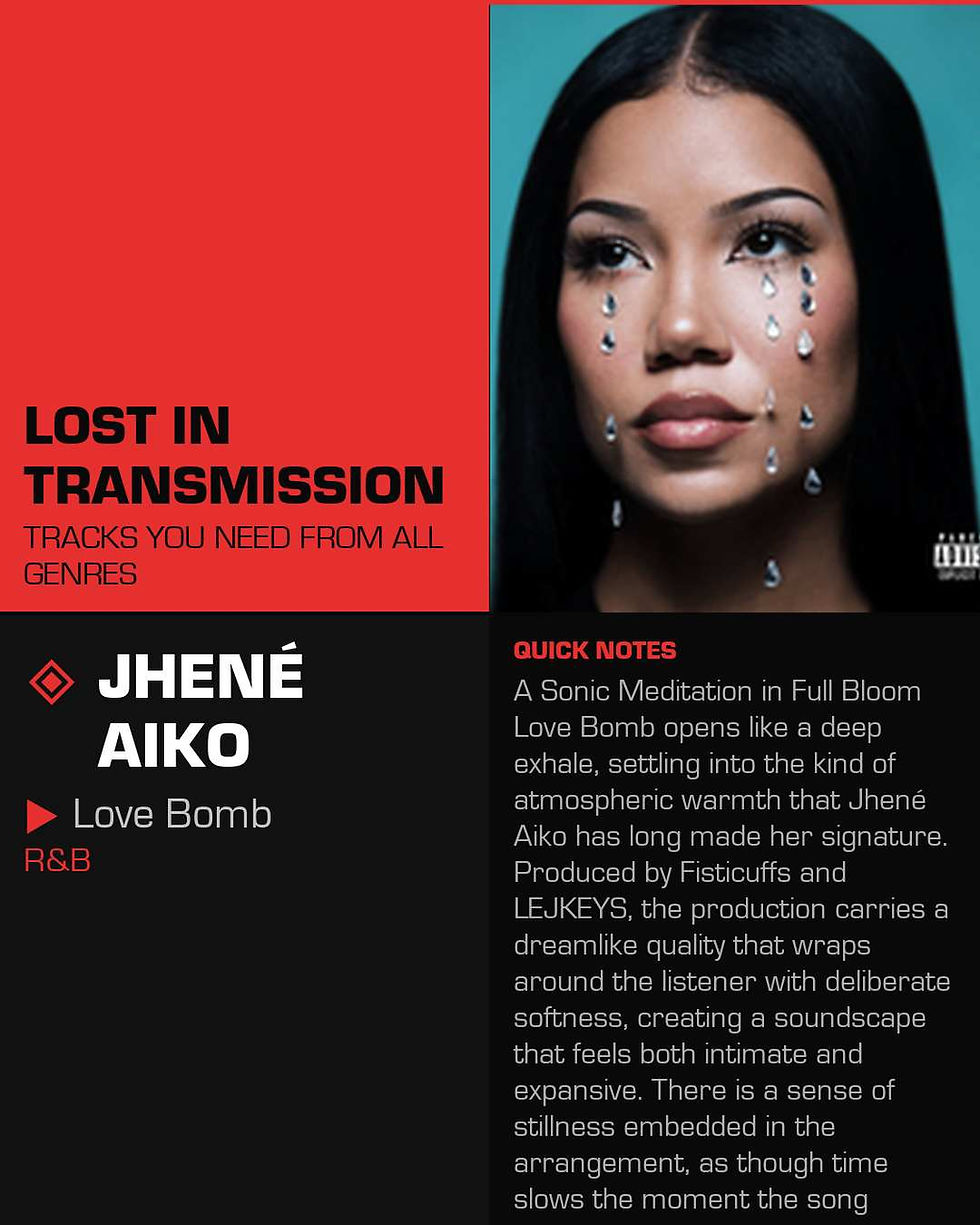
Like, Whatever arrives with the kind of effortless energy that Jhené Aiko has long made her signature, drifting in on a production bed from Fisticuffs and LEJKEYS that feels simultaneously sun-soaked and slightly detached. The beat carries a laid-back West Coast warmth, the kind that feels like late afternoon light filtering through tinted windows, unhurried and unbothered. There is a looseness to the instrumental architecture here that perfectly mirrors the song's titular attitude, never pushing too hard, never overselling its own cool.
Production That Breathes
The production from Fisticuffs and LEJKEYS leans into a hazy, melodic softness that serves as the ideal canvas for Jhené's vocal style. Textures feel deliberately light, with elements that shimmer rather than pound, giving Like, Whatever an airy quality that floats through the listener's ears without demanding attention yet somehow holding it completely. The soundscape feels rooted in a Westside sensibility, which aligns naturally with the album title Westside Whimsy, blending nostalgic warmth with a contemporary smoothness.
Jhené's Vocal Presence
Jhené Aiko's voice on Like, Whatever is characteristically gentle yet emotionally precise. She occupies the space between singing and speaking with a naturalness that few artists can genuinely claim, and here she uses that gift to wrap herself around the production like it was tailored to her breath. There is no vocal theatrics, no unnecessary embellishment, just a deeply personal and intimate delivery that gives the song its emotional texture without ever becoming overwrought.
Tyga's Contribution
Tyga's feature on Like, Whatever adds a contrasting energy that keeps the song from becoming too inward-looking. His presence brings a rhythmic confidence and a street-level ease that offsets Jhené's introspection, creating an interesting tonal push and pull between the two artists. Rather than clashing, the pairing feels considered, with both voices occupying their own lane while still contributing to a shared mood of casual, almost philosophical nonchalance.
Overall Impression
Like, Whatever is the kind of song that rewards a relaxed listen, one that asks nothing of you and gives back something quietly substantial in return. The Fisticuffs and LEJKEYS production holds everything together with a refined but unpretentious touch, and the combined performances from Jhené Aiko and Tyga make the song feel lived in and genuine. It is a strong entry in Jhené's catalogue and a fitting piece of the Westside Whimsy puzzle.
Listen To Jhené Aiko Like, Whatever
Jhené Aiko Like, Whatever Lyrics Meaning Explained
The meaning of Like, Whatever by Jhené Aiko is one of radical self-acceptance and emotional liberation a celebration of moving forward after pain without letting bitterness take root. The song captures a specific emotional headspace: someone who has been through something difficult, has processed it, and has consciously chosen joy over resentment. It's a portrait of healing that doesn't look like therapy or stillness, but instead like a low-key party in West L.A. with sake and good vibes.
Healing Through Detachment
The opening verse sets the emotional foundation immediately. Jhené sings, "Bridges were burned, but lessons were learned, so I am still grateful." This line is the philosophical core of the entire song. She doesn't deny that something went wrong or that relationships ended. Instead, she reframes the loss as tuition paid for wisdom. The phrase "like whatever" isn't dismissiveness born of indifference it's the verbal shrug of someone who has genuinely made peace with circumstances they cannot change. The repetition of "whatever" throughout the track functions almost like a mantra, a way of continually releasing attachment to outcomes.
The admission that she's been "laying alone and making my drink too strong" adds crucial texture. She's not pretending the healing process was painless or clean. There's loneliness baked into the solitude, but she's "carrying on" anyway the choice of that phrase suggesting deliberate, sustained forward motion rather than passive drifting.
Reclaiming Space and Setting Boundaries
By the second verse, the energy shifts from private reflection to something more outward and social. "Just another day in West L.A., party on the weekend at my place" signals a reclamation of her own space and life on her own terms. The Spanish phrase "mi casa, su casa" immediately followed by "I don't want no problems / Please only bring positive vibes" is telling. She's open, welcoming even, but she's curating her environment. The invitation is conditional. Joy is the price of admission.
The chorus crystallizes this boundary-setting into its most direct form: "If you don't love me, get the fuck away from me." It's blunt and unapologetic, but it flows naturally from the song's emotional logic. Someone who has burned bridges and chosen gratitude anyway has no patience left for half-hearted or hostile energy. The declaration "I don't see no haters in sight" reads as both an observation and a choice she has structured her world so that negativity has no foothold.
Celebration as a Political Act
There's something quietly defiant about the chorus line "I'm just celebrating my life." In context, after loss and isolation and burned bridges, choosing to celebrate feels like resistance. It's not a triumphant brag but more of a quiet insistence on joy as a right. The alcohol references Asahi, sake, drinks made too strong aren't just atmospheric detail. They're signals of someone loosening the grip of whatever kept them tightly wound, allowing themselves to exhale.
The mention of "Jahi just called me and told me we should have a party" introduces community into what began as a solo emotional journey. The healing has reached the point where connection is welcome again, where she's willing to say "if you're tryna slide, I'm down to vibe tonight."
Tyga's Verse and Tonal Contrast
Tyga's contribution in the third verse sits in interesting contrast to Jhené's sections. Where she is inward-looking and emotionally grounded, his verse is outward-facing and more conventionally flirtatious: "I wished for a star / It fell in my lap." He mirrors the West L.A. setting and the sake imagery "this sake is bomb" but his emotional register is pursuit rather than peace. The line "I ain't worried 'bout them other niggas 'cause I'm the nigga" echoes the song's anti-hater sentiment but from a place of competitive confidence rather than serene detachment.
The two perspectives together suggest the song exists in a social space where Jhené's grounded, self-celebratory energy is magnetic something others want to be near. Her "whatever" becomes the calm center around which the party orbits.
The Outro as Grounding
The outro's simple repetition "Just a day in West L.A." brings everything back to earth. For all the emotional complexity of what the song explores, it insists on the ordinary. This is not a dramatic reckoning or a grand proclamation. It's just a day. The specificity of the location grounds the abstract themes of self-acceptance and boundary-setting in something tangible and lived-in, reminding the listener that healing happens in ordinary time, in ordinary places, one day at a time.
Jhené Aiko Like, Whatever Lyrics
Intro: Jhené Aiko
Ayy
Verse 1: Jhené Aiko
I'm carrying on like I can't do wrong 'cause I can't do no wrong
Been staying at home and laying alone and making my drink too strong
Bridges were burned, but lessons were learned, so I am still grateful, uh
It's just whatever, uh, like whatever (Whatever), yeah
Pre-Chorus: Jhené Aiko
I got Asahi and sake inside of my body (Uh)
Jahi just called me and told me we should have a party
I'm staying in for the night, but man, fuck it, I'm on one
So if you're tryna slide, I'm down to vibe tonight, uh
Chorus: Jhené Aiko
I don't see no haters in sight, mm
I'm just celebrating my life
If you don't love me, get the fuck away from me
I don't see no haters in sight
If you don't love me, get the hell on
Like whatever (Whatever, yeah)
Verse 2: Jhené Aiko
Just another day in West L.A., party on the weekend at my place
Who bringing the drink? 'Cause I got the games
I been out the way, I've been M.I.A.
Mi casa (Casa), su casa (Yeah), I don't want (Want) no problems (No)
Please only (Please) bring positive vibes, I
Pre-Chorus: Jhené Aiko
I got Asahi and sake inside of my body (Uh)
Jahi just called me and told me we should have a party (Oh yeah)
I'm staying in for the night, but man, fuck it, I'm on one
So if you're tryna slide, I'm down to vibe tonight, uh
Chorus: Jhené Aiko
I don't see no haters in sight (Tell the hater that it's on sight)
I'm just celebrating my life
If you don't love me, get the fuck away from me
I don't see no haters in sight
If you don't love me, get the hell on
Like whatever (Whatever)
Verse 3: Tyga
Uh, West side, I just flew in
I know you up late, tell me what we doing
Smoke a lil', pop somethin' under the influence
Opps in the party, it's your party, won't ruin it
Baby, L-L, you doin' it well
That body on demon time, ain't goin' to hell
I know you a freak, girl, you playing it well
Put your number in my cell, let's break the spell
I'm way too invested, I manifested and made it
We toasting and taking shots, this sake is bomb, bomb
You give me that pom, pom, La Fleur, you put it on
We stumping inside the party, baby, look at your body (Oh my God)
I wished for a star
It fell in my lap, that's the type of shit I'm on
I ain't worried 'bout them other niggas 'cause I'm the nigga
If you choose another nigga, I'd still be your nigga, what's up?
Chorus: Jhené Aiko & Tyga
I don't see no haters in sight, mm (Tell the hater it's on sight)
I'm just celebrating my life
If you don't love me, get the fuck away from me
I don't see no haters in sight
If you don't love me, get the hell on
Like whatever (Whatever, yeah)
Outro
Just a day in West L.A
Just a day in West L.A
Just a day in West L.A


Comments