
Snoop Dogg Stranger Than Heaven Meaning and Review
A Sound Unlike Any Other
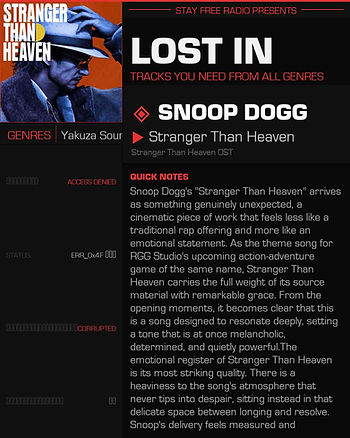
Snoop Dogg's "Stranger Than Heaven" arrives as something genuinely unexpected, a cinematic piece of work that feels less like a traditional rap offering and more like an emotional statement. As the theme song for RGG Studio's upcoming action-adventure game of the same name, Stranger Than Heaven carries the full weight of its source material with remarkable grace. From the opening moments, it becomes clear that this is a song designed to resonate deeply, setting a tone that is at once melancholic, determined, and quietly powerful.
Between Two Worlds
The emotional register of Stranger Than Heaven is its most striking quality. There is a heaviness to the song's atmosphere that never tips into despair, sitting instead in that delicate space between longing and resolve. Snoop's delivery feels measured and deliberate, stripped of the bravado that often defines his commercial work. In its place is something more vulnerable, a voice carrying the emotional truth of characters who feel like outsiders in every room they enter. The production mirrors this perfectly, balancing warmth with an undercurrent of tension that never fully releases.
Production and Sonic Identity
Sonically, Stranger Than Heaven leans into a rich, layered soundscape that feels cinematic in scope. The production choices are thoughtful and restrained, favoring atmosphere over excess. There is a quality to the instrumental arrangement that feels almost timeless, blending elements that suggest both Eastern and Western musical sensibilities without leaning too heavily on either. This tonal balance is not accidental. It reflects the very identity of the game it represents, and the result is a track that sounds like it belongs equally to multiple worlds, belonging fully to none and yet deeply connected to all.
Snoop Dogg's Performance
What makes Snoop Dogg's contribution to Stranger Than Heaven so compelling is how well his voice serves the song's emotional core. His cadence here is unhurried and thoughtful, almost conversational in places, which gives the listening experience an intimacy that is hard to shake. He is not performing so much as bearing witness to something, and that distinction matters enormously. The restraint in his performance elevates the material, lending Stranger Than Heaven a sincerity that makes it feel like more than a promotional tie-in. It feels like a genuine artistic collaboration.
A Theme Song That Transcends Its Purpose
Ultimately, Stranger Than Heaven succeeds where many video game theme songs fall short: it works as a standalone piece of music. The tone is cohesive, the production is carefully crafted, and Snoop's performance brings a grounded humanity to what could have been a straightforward commercial offering. Whether heard alongside the game's cast and story trailer or in isolation, Stranger Than Heaven leaves a lasting impression. It is a song that understands its emotional assignment and fulfills it with a quiet confidence that lingers long after the final note fades.
Listen To Snoop Dogg Stranger Than Heaven
Snoop Dogg Stranger Than Heaven Lyrics Meaning Explained
The meaning of Stranger Than Heaven by Snoop Dogg is a multilingual meditation on resilience, belonging, and the transformation of pain into power. Brought to life through the voices of Tori Kelly, Ado, Satoshi Fujihara, and Snoop Dogg, the song builds a shared emotional world that transcends language and cultural boundaries, exploring how people from different walks of life find sanctuary after suffering.
Finding Belonging Beyond Pain
At its core, the song is about discovering a place of safety and identity after enduring hardship. The chorus, repeated across all three languages, anchors this theme: "I found a place where I'm not alone / Tore down the gates, took all my pain and made a weapon." This transformation is central to everything the song argues. Pain is not merely survived here; it is actively repurposed. The gates being torn down suggest the dismantling of barriers, whether internal or external, that once kept the speaker isolated.
Tori Kelly's bridge reinforces this by declaring, "Paved my way, won't live in my past / Once you come here, you'll never look back." The place they have found is not just a destination but a permanent shift in identity. There is no returning to who they were before.
The Edge and the Dark City
The opening verse establishes a world of danger and heightened awareness. "Back streets, walking on the edge of the night / Senses sharper than the edge of a knife" creates a portrait of someone navigating a threatening environment with vigilance honed by necessity. The sensory sharpness here reads less as aggression and more as survival.
The Japanese pre-chorus deepens this cityscape. "Wandering in this dark, dark city / Searching for how to turn the lights on / Trying to shape the heart / My hands always end up stained, at the end of this pain" gives the metaphor of darkness a more interior quality. The stained hands suggest that the struggle to build something meaningful leaves its mark. It is not clean work. The speaker is not looking for redemption through purity but through perseverance in spite of that staining.
The Japanese verse adds historical and communal weight: "In an era that just keeps turning chaotic / What was the place where hidden lights once existed / This blood of my resolve surges within me." The chaotic era is not specified, which makes the lines feel universal. The "hidden lights" imply that goodness and meaning existed before and can exist again, and the "blood of resolve" frames this conviction as something deeply physical and inherited.
Snoop Dogg's Verse and the Weight of the Past
Snoop Dogg's verse shifts the tone toward something more somber and reflective. "In the cracks of the walls, feel the weight of old sins / Nothing stays buried, no names, not a word" suggests that history has a way of surfacing no matter how deeply it is suppressed. The imagery of ash, silence, and buried presence creates an atmosphere of reckoning. "Ash on the water and a hush in the air / Men come and go, but few leave a prayer" speaks to the fragility of legacy and memory.
Crucially, his verse ends not with despair but with a directive: "Don't read between the lines, close your eyes and observe the answer." This is a call to trust intuition over analysis, to feel one's way toward truth rather than intellectualize it. Coming where it does in the song, it functions as a bridge between the darkness described and the hard-won sanctuary of the chorus.
Strength Without Compromise
One of the most striking images comes from the Japanese chorus line translated as "No trace of rust, I won't let anyone touch me, I have no intention of pleasing you." This line brings a fierce autonomy into the song's emotional landscape. The place they have found is not merely a refuge but a position of earned dignity. The speaker is unblemished, uncompromising, and entirely their own. This is not softness. It is a power reclaimed.
A Place Stranger Than Heaven
The title phrase itself carries a quiet paradox. Heaven is typically the ultimate destination, the highest imaginable good. By describing this found place as "stranger than heaven," the song suggests something beyond conventional ideals of peace or salvation. Whatever this sanctuary is, it is more real, more hard-won, and more personal than any abstract paradise. It was not given. It was built from pain, resolve, stained hands, and the courage to stop living in the past.
Snoop Dogg Stranger Than Heaven Lyrics
Chorus: Tori Kelly
I found a place where I'm not alone
Tore down the gates, took all my pain and made a weapon
You know I could take you somewhere, oh
Stranger than heaven
Verse 1: Tori Kelly, Ado, Satoshi Fujihara
Back streets, walking on the edge of the night
Senses sharper than the edge of a knife
Looking to my left, something don't feel right (Hey)
ただただ荒れていく時代に
隠れ輝き居た地は何
滾らせるこの覚悟の血 (Hey)
Pre-Chorus: Satoshi Fujihara, Satoshi Fujihara & Ado
彷徨う暗い暗い街
明かりの灯し方探し出す
心の形を作る
手はいつも汚れだらけ痛みの果て
Chorus: Tori Kelly, Satoshi Fujihara
I found a place where I'm not alone
Tore down the gates, took all my pain and made a weapon
錆ひとつない 触らせやしない 媚びる気はない
I found a place that I can call home
Testing my fate, took all my pain and made a weapon
連れ行くその場所は
Stranger than heaven
Verse 2: Snoop Dogg
Followed by the echoes until the black light dims
In the cracks of the walls, feel the weight of old sins
Nothing stays buried, no names, not a word
Dive through the silence while the memories blur
Ash on the water and a hush in the air
Men come and go, but few leave a prayer
A secret if you bury the presence in the past
Rumors rise slow, but the truth will move fast
Under lock of death, the name still burn
Don't read between the lines, close your eyes and observe the answer
Pre-Chorus: Satoshi Fujihara & Ado
汚れだらけ痛みの果て
Chorus: Tori Kelly, Satoshi Fujihara & Ado, Ado
I found a place where I'm not alone
Tore down the gates, took all my pain and made a weapon
錆ひとつない 触らせやしない 媚びる気はない
I found a place that I can call home
Testing my fate, took all my pain and made a weapon
連れ行くその場所は
Stranger than heaven
Interlude: Tori Kelly, Satoshi Fujihara
Ahh, ooh-hmm, yeah-yeah
Ooh-ooh (Oh)
Oh, yeah (Ayy)
Yeah-yeah, ayy, yeah-yeah
(Ayy) Oh, alright
Bridge: Tori Kelly
Paved my way, won't live in my past
Once you come here, you'll never look back
Pull no shot till you're part of this pack, 'cause
Stranger than heaven
Paved my way, won't live in my past
Once you come here, you'll never look back
Pull no shot till you're part of this pack, 'cause
Stranger than heaven
Chorus: Tori Kelly, Satoshi Fujihara, Ado
I found a place where I'm not alone
Tore down the gates, took all my pain and made a weapon
錆ひとつない 触らせやしない 媚びる気はない
I found a place that I can call home (Ah)
Testing my fate (Testing my fate), took all my pain and made a weapon
連れ行くその場所は、oh
Stranger than heaven

Comments