
Ella Langley Froggy Went A Courtin' (Outro) Meaning and Review

A Quiet Goodbye: Froggy Went A Courtin' (Outro) by Ella Langley
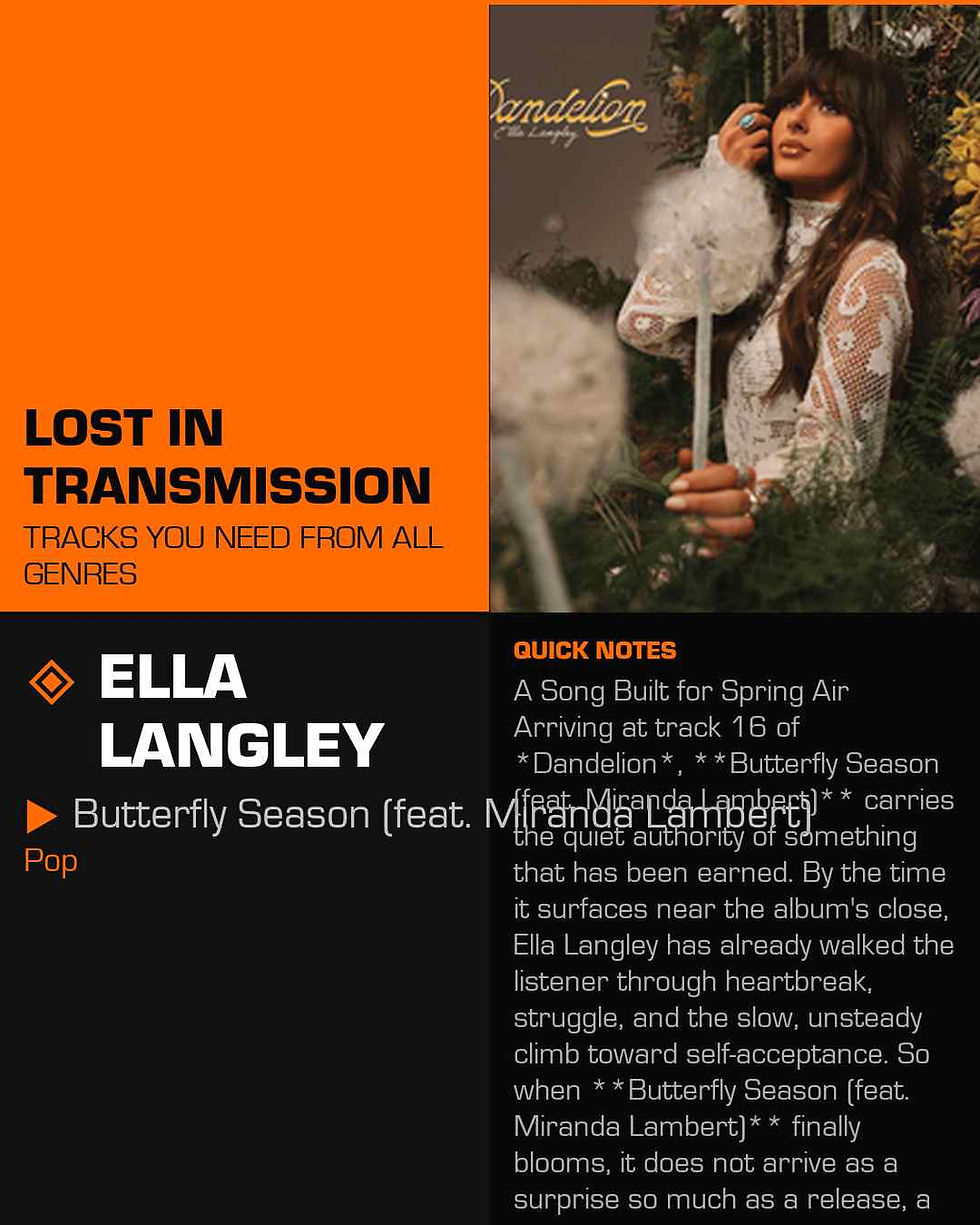
At just 51 seconds, Froggy Went A Courtin' (Outro) does something quietly radical for a closing track: it says goodbye with almost nothing at all. No drums, no full band, no polished production swell. Just Ella Langley, her guitar, and a centuries-old folk tune that she first learned from her grandfather. In the context of an album like Dandelion, which leans heavily into country-pop ambition and full-band arrangements, this bare-bones closer lands with a warmth that feels genuinely disarming.
Intimacy as a Production Choice
The decision by producers Ella Langley and Ben West to strip everything back here is not an oversight. It is the point. Froggy Went A Courtin' (Outro) mirrors the album-opening intro version of the same song, creating a deliberate bookend structure that frames the entire Dandelion listening experience. The production is about as minimal as it gets, with Langley credited for both vocals and acoustic guitar alone. The result is a fireside intimacy, something that sounds less like a studio recording and more like a quiet moment at the end of a long evening.
Tone and Feel
Where much of Dandelion carries the shine and scale of polished country-pop production, Froggy Went A Courtin' (Outro) trades all of that for something more personal and unguarded. The playful warmth Langley brings to it deepens with repeated listening, revealing a lightness of touch that feels intentional and unhurried. There is a wink in the delivery, a gentle humor carried through the traditional punchline that closes the track and invites the listener to carry the song forward themselves.
More Than a Closer
Froggy Went A Courtin' (Outro) functions less as a conventional album closer and more as a symbolic full stop. By expanding slightly on the intro version with a few additional verses, it gives the bookend structure a sense of completion rather than simple repetition. The contrast between its sparseness and the fuller production surrounding the rest of Dandelion is striking, and that contrast does much of the emotional heavy lifting. It reminds the listener that beneath all the polish, the album grew from something deeply personal and unpretentious.
A Reminder of Where It All Began
In 51 seconds, Froggy Went A Courtin' (Outro) manages to reframe the album that came before it. Rooted in a folk tune passed down through family, performed with nothing but voice and guitar, and produced with the restraint to leave it that way, it sends Dandelion off not with a grand finale but with a quiet, knowing smile. That choice, more than anything, speaks to the confidence and clarity at the heart of Ella Langley's vision for this record.
Listen To Ella Langley Froggy Went A Courtin' (Outro)
Ella Langley Froggy Went A Courtin' (Outro) Lyrics Meaning Explained
The meaning of Froggy Went A Courtin' (Outro) by Ella Langley is a playful, self-aware farewell that blends folk tradition with intimate affection, serving as a gentle and whimsical close to a musical journey.
Folk Roots and Tradition
The imagery in the verse draws directly from the old folk tradition of "Froggy Went A Courtin'," a centuries-old children's song that has been passed through generations with countless variations. The lines "Apples on the table, peaches on the shelf" are classic nonsense-verse imagery that appears in traditional versions of the song, evoking a simple, pastoral domesticity. Rather than advancing a narrative, this imagery functions as a kind of comfortable, familiar landscape the kind of homespun detail that makes folk music feel lived-in and communal.
The Meta Ending
Perhaps the most striking element is the line "If you want any more, you can sing it yourself." This is a traditional folk song device, a direct address to the listener that signals the song is wrapping up and passes the creative baton outward. In Ella Langley's hands, this becomes more than a conventional sign-off. It is an act of gentle empowerment, almost a wink, suggesting that the song belongs as much to whoever is listening as it does to the performer. The repetition of the verse builds a sense of winding down, like the last revolution of a music box slowly coming to rest.
Intimacy Through Address
Running through the verse is the recurring phrase "baby of mine," which transforms what could be a purely playful folk exercise into something tender and personal. The addition of asides like "uh-huh," "Just like that," and "Oh-huh" give the outro a conversational, almost whispered quality. These interjections make the listener feel as though they are witnessing something private a performer wrapping up not just a song, but a moment shared with someone beloved.
Closure and Completeness
The intro's repeated phrase "Last one" frames everything that follows as a deliberate and knowing conclusion. There is no ambiguity about intention here; Langley is signaling finality from the very first breath. The combination of "Last one" and the folk tradition's built-in ending device creates a layered sense of closure, one that is both structurally complete and emotionally warm. The song does not end with a grand flourish but with a quiet, affectionate pass of the torch, leaving the listener holding something gentle.
Ella Langley Froggy Went A Courtin' (Outro) Lyrics
Intro
(Last one)
(Baby of mine)
Last one
Verse
Apples on the table, peaches on the shelf, uh-huh
Apples on the table, peaches on the shelf, baby
Apples on the table, peaches on the shelf
If you want any more, you can sing it yourself, uh-huh
Baby of mine
I said apples on the table, peaches on the shelf
If you want any more, you can sing it yourself
Oh-huh, baby of mine (Just like that)


Comments